Travertine Hot Springs
Natural geothermal hot springs near Bridgeport in California, known for mineral-rich water, travertine terraces, primitive soaking pools, and an Eastern Sierra setting.
Travertine Hot Springs is a natural geothermal spring area near Bridgeport in Mono County, California. Set against the dramatic landscape of the Eastern Sierra, the site is known for hot mineral water, colourful travertine deposits and a collection of primitive soaking areas shaped by both natural processes and long-term recreational use.
Unlike a developed thermal resort, Travertine Hot Springs remains a comparatively simple outdoor geothermal experience. The Bureau of Land Management manages the surrounding Travertine Hot Springs Area of Critical Environmental Concern, where recreation must be balanced with protection of natural and cultural resources.
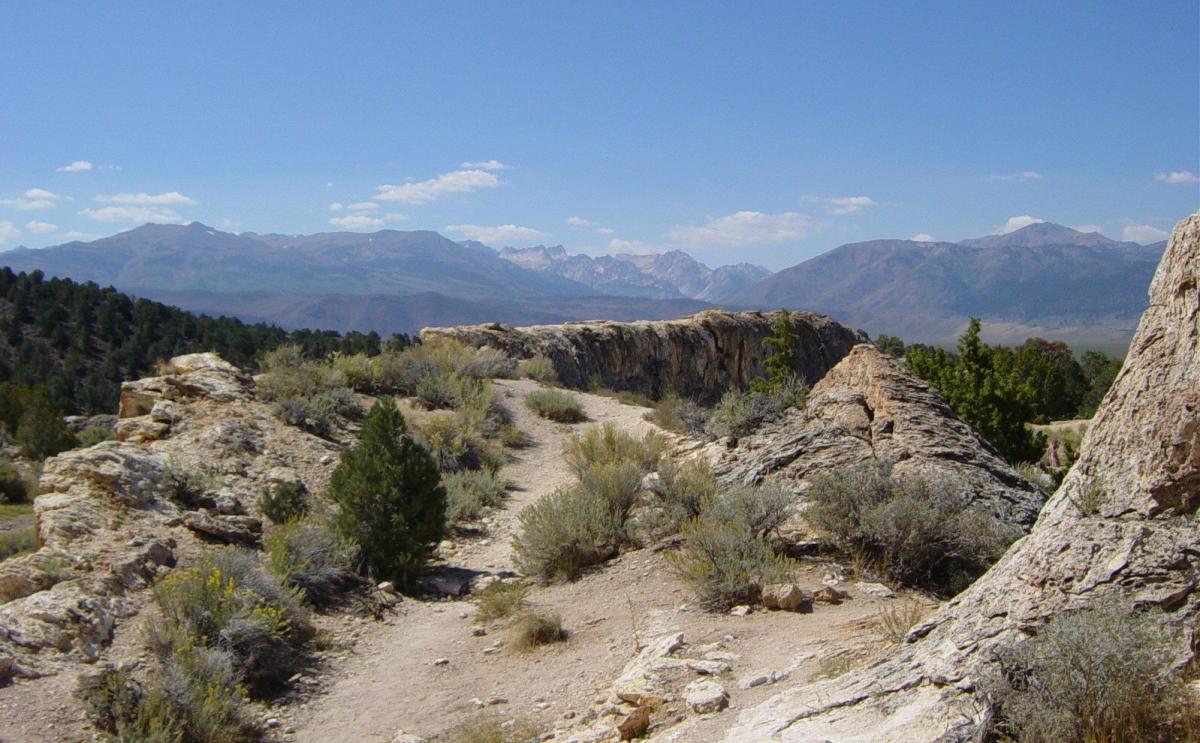
Travertine Hot Springs near Bridgeport, California. Photo: Daniel Mayer / Wikimedia Commons, licensed under CC BY-SA 1.0.

Quick Facts
- Location: Near Bridgeport, Mono County, California, United States
- Nearest town: Bridgeport
- Spring type: Natural geothermal hot springs
- Recorded source temperature: Approximately 82°C / 180°F
- Soaking temperature: Variable and considerably cooler than the hottest source water
- Bathing allowed: Recreational soaking occurs at the site; always follow current BLM signs, closures and safety instructions
- Access: Road access followed by short walking access
- Management: Bureau of Land Management, Bishop Field Office
- Setting: Primitive outdoor geothermal soaking area
- Best time: Depends on weather, road conditions and seasonal access
- Nearby related site: Buckeye Hot Springs
Why Visit
Travertine Hot Springs combines three things that make a geothermal site particularly memorable: naturally heated water, striking mineral formations and a broad Eastern Sierra landscape. The springs emerge around terraces built from mineral deposits left behind by geothermal water. These formations give the site its name and create an environment very different from an ordinary swimming hole or constructed thermal pool.
Travertine is also useful for travellers wanting to understand California’s geothermal landscape beyond commercial spas. It is an outdoor natural hot spring where geology is visible almost everywhere around the water.
Bathing Experience
Travertine Hot Springs is a primitive natural soaking area rather than a maintained swimming complex. Water emerging from the geothermal system can be extremely hot. Historical geothermal data used by the Bureau of Land Management records Travertine Hot Springs at approximately 82°C, or 180°F. That figure should not be interpreted as the temperature of every soaking pool.
Water cools as it moves away from the hottest source areas and through the surrounding channels and pools. Conditions can also change with water flow, weather and alterations within the geothermal system. Visitors should therefore never assume that a pool is safe simply because other people are using it. Always test the water carefully before entering.
Location and Access
Travertine Hot Springs is located near Bridgeport in Mono County on the eastern side of California’s Sierra Nevada. The Bureau of Land Management identifies the springs as part of the Travertine Hot Springs Area of Critical Environmental Concern and manages recreational access through the Bishop Field Office.
Access is associated with the Jack Sawyer Road area. BLM mapping shows parking, trails, soaking tubs and different road-access classifications within the surrounding recreation area. Road conditions can change after rain, snow, freezing weather or periods of heavy use. Travellers should check current conditions before relying on an ordinary passenger vehicle.
Map note:
- Approximate geothermal spring coordinates: 38.2450, -119.2050.
- These coordinates identify the spring area and should not automatically be treated as the exact parking position.
- Access is from the Bridgeport area via local roads including Jack Sawyer Road.
- Check current BLM information before travelling.
Visitor Basics
- Natural geothermal hot springs near Bridgeport, California.
- Located in Mono County in the Eastern Sierra region.
- Managed by the Bureau of Land Management Bishop Field Office.
- Primitive outdoor setting rather than a commercial thermal resort.
- Short walking access from the recreation and parking area.
- Natural surfaces can be uneven and slippery.
- Road conditions can vary with weather and season.
- Facilities are limited compared with a developed swimming or spa complex.
- Visitors should carry out rubbish and avoid damaging the surrounding formations.
Entry, Rules, and Conditions
Travertine Hot Springs is managed as part of a sensitive public-land recreation area rather than as a conventional commercial attraction.
The Bureau of Land Management has undertaken recreation-management and habitat-restoration work at Travertine to improve visitor access while reducing damage caused by unmanaged recreation.
This includes defining authorised trails, rehabilitating unnecessary user-created tracks and managing parking and pullout areas.
Visitors should use established access routes, respect posted restrictions and avoid creating new tracks through the landscape.
Temporary closures can occur. Travertine Hot Springs has previously been closed to public access for Tribal ceremonial use, demonstrating why older travel information should never be relied on as proof that the site is currently accessible.
Access check: Before making a special trip, check the official BLM Bishop Field Office for current public-land information, restrictions, temporary closures and other conditions that may affect access to Travertine Hot Springs.
Spring Type and Water
Travertine Hot Springs is a genuine natural geothermal spring system.
Historical geothermal records list source water at approximately 82°C, or 180°F. This represents very hot geothermal water and should not be confused with the temperature of individual soaking pools farther away from the hottest source.
The water deposits minerals as it moves through the spring environment. Calcium-rich geothermal water can release calcium carbonate as conditions change near the surface, gradually creating the layered mineral material known as travertine.
These deposits can build terraces, channels and unusual textured surfaces around geothermal springs over long periods of time.
The combination of hot water and active mineral deposition gives Travertine Hot Springs a clear natural geothermal identity.
What Is Travertine?
Travertine is a form of calcium-carbonate rock commonly associated with mineral-rich springs, especially geothermal systems.
Groundwater moving underground can dissolve minerals from surrounding rock. When that mineral-rich water returns to the surface, changes in pressure, temperature and dissolved gases can cause calcium carbonate to precipitate from the water.
Repeated mineral deposition gradually creates layers, terraces, channels and crust-like formations around the spring.
These formations are part of the natural geological character of Travertine Hot Springs and should not be broken, carved or deliberately altered.
Safety and Etiquette
- Never assume a pool is safe based on appearance alone.
- Test water temperature carefully before entering.
- Stay away from water that feels excessively hot.
- Remember that the hottest geothermal source water can cause serious burns.
- Supervise children closely around geothermal water.
- Take extra care on wet, mineral-coated or uneven surfaces.
- Stay on established trails where directed.
- Do not damage travertine formations or alter natural features.
- Do not create new tracks or shortcuts across sensitive ground.
- Carry out rubbish and leave the area cleaner than you found it.
- Respect other visitors and the cultural importance of the area.
- Follow all temporary closures and BLM instructions.
Cultural and Environmental Respect
Travertine Hot Springs is more than a recreational soaking location.
The Bureau of Land Management manages the area for natural, recreational and cultural values. Management work has specifically focused on reducing damage caused by unmanaged recreation and protecting sensitive natural and cultural resources.
The springs also have continuing cultural importance for Native American communities in the region. BLM has previously temporarily closed the area to allow ceremonial use by a local Tribe.
Visitors should treat the landscape accordingly: use established access routes, respect closures, avoid damaging mineral formations and allow cultural activities to occur without interference.
Best Time to Visit
Travertine Hot Springs can offer very different conditions depending on the season.
The Eastern Sierra experiences cold winters, snow and freezing conditions, while summer can bring stronger sun exposure and hotter daytime temperatures.
Spring and autumn can provide more moderate conditions, but there is no single guaranteed best season because weather, road conditions and geothermal water flow can vary.
Winter travellers should pay particular attention to snow, ice and road conditions. After storms or wet weather, unsealed access roads may also become more difficult.
Before travelling, check current weather and BLM access information. Travellers approaching Bridgeport via US 395 should also check Caltrans US 395 road conditions, particularly during winter, after storms or whenever changing mountain weather could affect the journey.
Nearby Attractions
- Bridgeport.
- Eastern Sierra scenic drives.
- Mono County geothermal landscapes.
- Bodie region.
- Mono Lake region.
- Buckeye Hot Springs.
- Other geothermal areas of the Eastern Sierra.
Where to Stay Nearby
Bridgeport is the most practical nearby town for travellers visiting Travertine Hot Springs.
The wider Bridgeport and Mono County area includes motel-style accommodation, cabins, campgrounds and other road-trip accommodation. Travellers looking for current local accommodation and broader trip-planning information can use the official Mono County Visitor Information resources rather than relying on a single accommodation provider.
Do not assume that overnight camping is permitted beside the soaking pools or within parking areas. Check current BLM rules and use designated or legally permitted camping areas.
FAQ
Is Travertine Hot Springs natural?
Yes. Travertine Hot Springs is a natural geothermal spring system near Bridgeport in California.
Why is it called Travertine Hot Springs?
The name refers to the calcium-carbonate mineral deposits created as mineral-rich spring water reaches the surface and deposits material around the geothermal system.
How hot is Travertine Hot Springs?
Historical geothermal records list source water at approximately 82°C, or 180°F. Individual soaking pools can be considerably cooler and their temperatures can vary.
Can you soak at Travertine Hot Springs?
Travertine is used as a recreational soaking area, but visitors must carefully test water temperature, obey current restrictions and avoid water that is too hot to enter safely.
Where is Travertine Hot Springs?
It is near Bridgeport in Mono County, California, on the eastern side of the Sierra Nevada.
Who manages Travertine Hot Springs?
The surrounding public land is managed by the Bureau of Land Management through its Bishop Field Office.
Is Travertine Hot Springs a developed spa?
No. It is a primitive outdoor geothermal recreation area rather than a commercial resort or maintained thermal swimming complex.
Are the hot springs always open?
Do not assume so. Temporary closures and access restrictions can occur, so current Bureau of Land Management information should be checked before travel.
Are the mineral formations fragile?
Yes. Travertine formations develop through continuing mineral deposition and should not be broken, carved or deliberately altered.
What town is closest to Travertine Hot Springs?
Bridgeport is the closest practical town and travel base.
Sources / Last Checked
Primary sources checked:
- Bureau of Land Management: Travertine Hot Springs ACEC Trails and Recreation Use Management.
- Bureau of Land Management: Travertine Hot Springs ceremonial closure information and closure map.
- Bureau of Land Management: Final Programmatic Environmental Impact Statement for Geothermal Leasing in the Western United States.
- U.S. Geological Survey geothermal research relating to thermal waters in the western United States.
- Wikimedia Commons: Travertine Hot Springs photograph by Daniel Mayer.
Image: Daniel Mayer / Wikimedia Commons, CC BY-SA 1.0.
Last checked: 24 August 2026.
Publishing note: Re-check BLM access notices, temporary closures and road conditions immediately before changing this page from draft to published.