Reykjadalur Hot River
Natural geothermal bathing river in Reykjadalur valley near Hveragerði in South Iceland, reached by a marked hiking trail through an active geothermal landscape.
Reykjadalur is a geothermal valley above Hveragerði in South Iceland where a marked hiking trail leads through steaming ground, hot springs and mud pools to a naturally heated river used for outdoor bathing. Unlike a developed thermal pool, Reykjadalur is a natural geothermal landscape. The bathing area is part of a flowing river, and water temperatures vary along its length. Visitors hike into the valley, choose a suitable section of the river, and bathe outdoors surrounded by hills and geothermal steam.
The setting is beautiful, but it also requires more care than a managed swimming pool. Trail conditions can change, geothermal ground can be dangerous away from marked paths, and the river becomes hotter farther upstream.
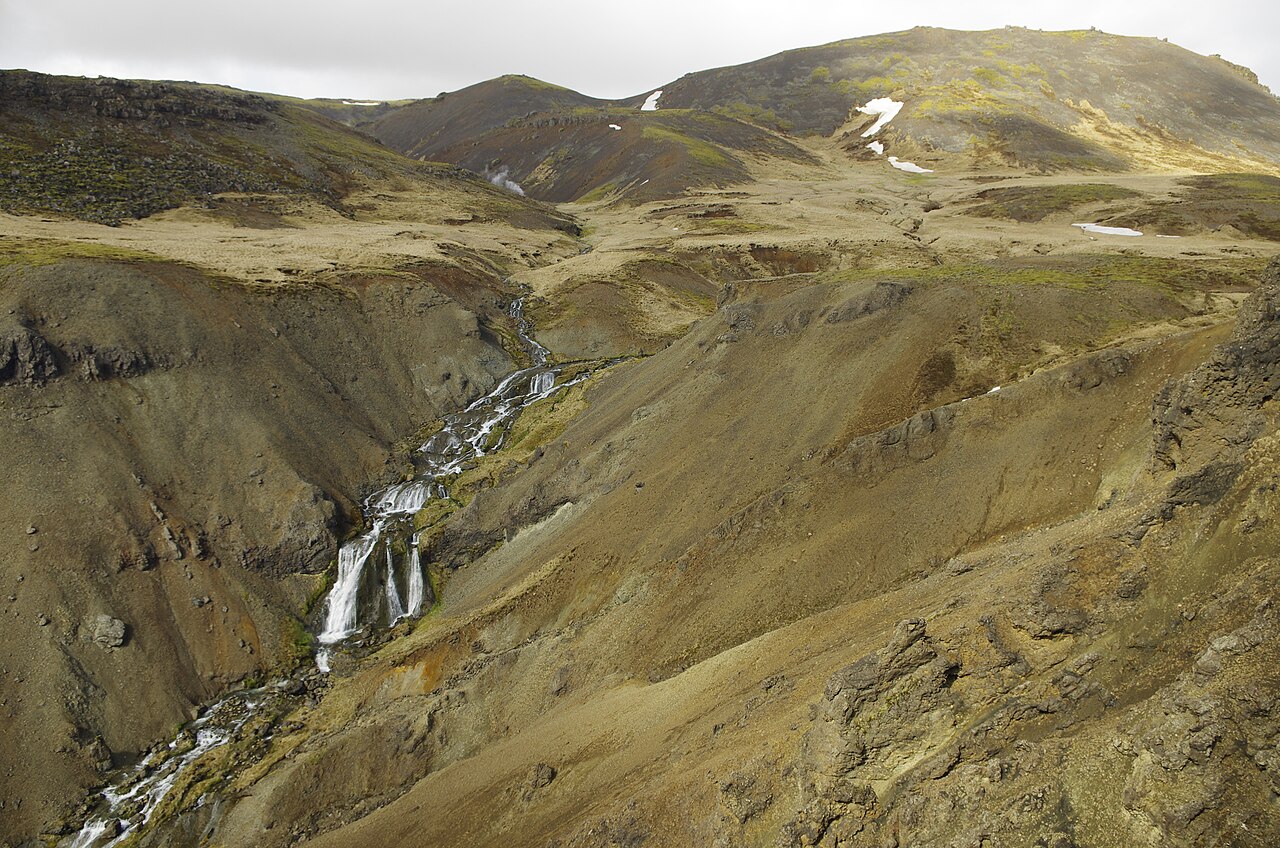
Reykjadalur Hot River. Photo: Anna Jonna Ármannsdóttir / Wikimedia Commons, licensed under CC BY-SA 3.0.
Quick Facts
- Country: Iceland
- Region: South Iceland
- Nearest town: Hveragerði
- Spring type: Natural geothermal river
- Bathing: Yes, in suitable sections of the river
- Access: Marked hiking trail
- Trail distance: About 3 km to the main bathing area according to Visit Iceland
- Walking time: Official estimates vary; allow enough time for conditions and your own pace
- Water temperature: Variable; generally warmer farther upstream
- Facilities: Basic facilities are available near the trailhead, but the bathing area itself is natural
- Best approach: Check current trail and weather conditions before setting out
- Main safety rule: Stay on marked paths in geothermal areas
What Is Reykjadalur?
Reykjadalur means “Steam Valley,” an appropriate name for a landscape filled with visible geothermal activity. The valley lies above Hveragerði, a town built within one of Iceland’s active geothermal regions. The route into Reykjadalur passes steaming vents, hot ground, mud pools and warm springs before reaching the section of river commonly used for bathing.
The hot river is formed where geothermal water mixes with cooler water. This means the bathing temperature is not fixed in the way it would be in a controlled swimming pool. For NHSNM, Reykjadalur is best described as a natural geothermal bathing river reached by a hike.
The Hike to the Hot River
The main route begins from the trailhead above Hveragerði. Hveragerði municipality describes the Reykjadalur trail as well marked and says the walk to the warm stream takes roughly 1.5 to 2 hours. Visit Iceland describes the main bathing river as approximately 3 kilometres along the trail and commonly presents the walk as around an hour in suitable conditions.
Those figures should be treated as guidance rather than a promise. Walking time depends on:
- weather
- trail surface
- fitness
- stops for photographs
- crowds
- seasonal conditions
- how far into the bathing area you continue
The trail includes uphill sections and crosses an exposed geothermal landscape. Conditions can become wet, muddy, icy or slippery.
Bathing in Reykjadalur
The attraction of Reykjadalur is the chance to soak in a naturally heated river rather than a constructed geothermal pool. Once you reach the established bathing section, wooden walkways and changing screens help concentrate visitors in areas intended for use and reduce damage to the surrounding vegetation.
The river is shallow in many places, and bathers generally sit or lie in the flowing water. There is no single perfect bathing point for everyone. The temperature varies depending on where you enter and how much hot and cold water is mixing at that location.
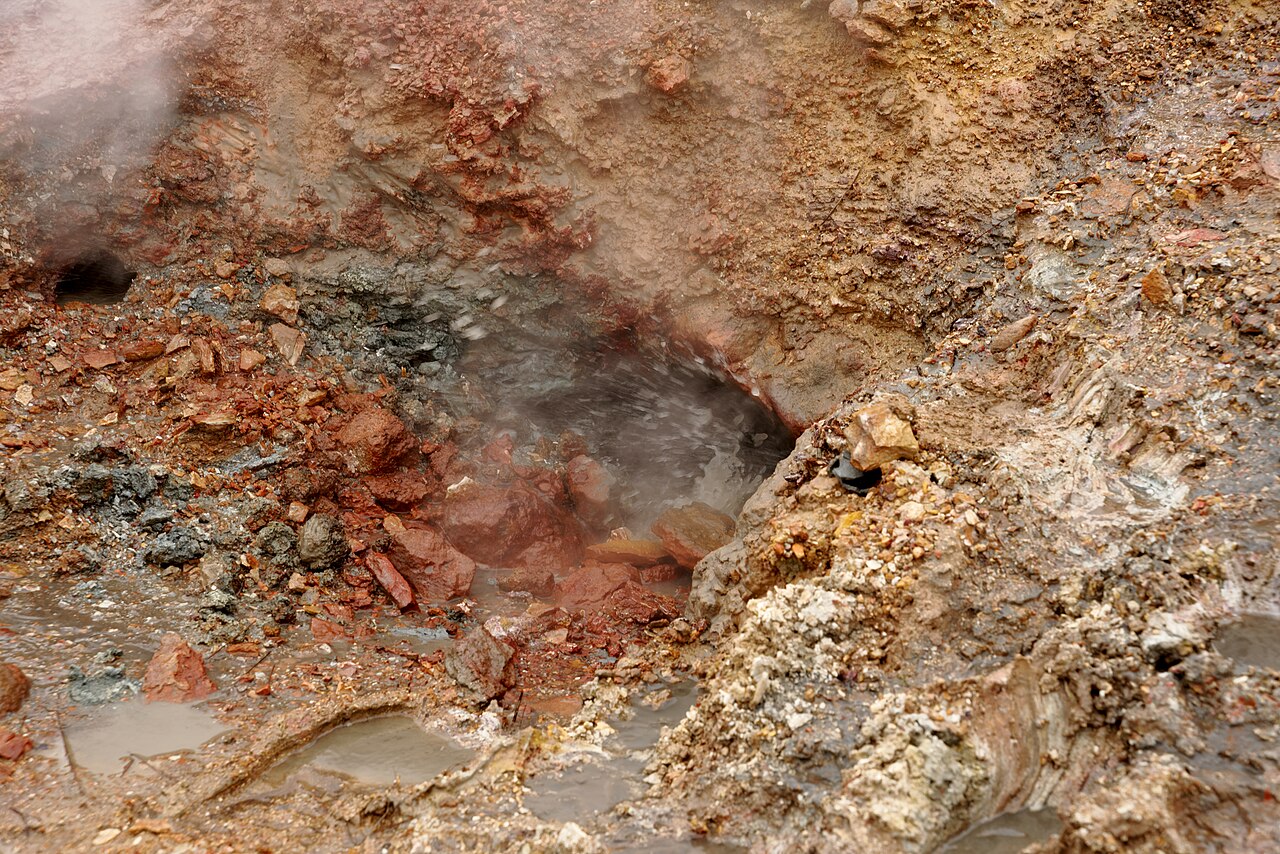
Geothermal spring in Reykjadalur Valley. Photo: Jakub Hałun / Wikimedia Commons, licensed under CC BY-SA 4.0.
Water Temperature and Choosing a Safe Spot
Visit Iceland notes that the river becomes hotter farther upstream. That does not mean visitors should simply keep walking upstream looking for the hottest possible water. Reykjadalur is an active geothermal area, and water emerging from geothermal ground can be dangerously hot. Choose established bathing areas, enter gradually, and move if the water feels uncomfortable.
Do not treat Reykjadalur as a river with one fixed published temperature. A better description is:
Variable natural bathing temperatures within a geothermal river, with generally hotter water farther upstream.
Geothermal Safety
Iceland’s Environment Agency warns that geothermal areas can contain water or mud at or above boiling temperature. The ground itself can also be hazardous. Thin crust may form over very hot water or mud and can break if stepped on. For that reason:
- remain on designated or clearly established paths
- obey signs and closures
- do not test geothermal water with your hands or feet
- keep children close in geothermal areas
- do not walk across steaming or discoloured ground simply because it appears firm
The marked trail is part of the safety system as well as a way of protecting the landscape.
Trail Conditions and Closures
Reykjadalur should not be described as guaranteed year-round access. Visit South Iceland advises that the trail can be closed and recommends checking current conditions through SafeTravel before visiting.
Temporary closures may be used when conditions are unsafe or when the trail and surrounding vegetation need protection. Heavy rain, thaw, mud, ice and winter weather can all make the route more difficult. Before leaving Hveragerði, check:
- current trail status
- local weather
- wind
- daylight
- road conditions if relevant
- SafeTravel notices
What to Bring
A Reykjadalur visit combines hiking with outdoor bathing, so visitors should prepare for both. Useful items include:
- sturdy walking shoes or boots
- swimsuit
- towel
- warm layers
- waterproof outer layer
- drinking water
- food or snacks
- a waterproof bag for wet clothing
- traction aids when icy conditions are possible
Icelandic weather can change quickly, even when the trailhead feels calm.
Protecting the Valley
Reykjadalur is a popular destination, and concentrated foot traffic can damage fragile vegetation and geothermal ground. Visit South Iceland specifically asks visitors to remain on the paths and help protect the landscape.
Use established bathing and changing areas rather than creating new tracks beside the river. Take rubbish back out with you and avoid disturbing geothermal formations.
Hveragerði and the Surrounding Geothermal Area
Hveragerði is closely associated with geothermal activity and is often called Iceland’s “Town of Hot Springs.” The town lies around 45 kilometres east of Reykjavík on the Ring Road and has long used geothermal energy, including for greenhouse cultivation.
Reykjadalur is one of the best-known outdoor attractions connected to this geothermal landscape. It is useful to distinguish the natural river from developed geothermal bathing businesses in and around Hveragerði. Reykjadalur itself remains a hike-in natural bathing experience.
Practical Visitor Tips
Arrive with enough time to complete the hike without rushing. Conditions in the valley can be very different from conditions in town, particularly in wind, rain, snow or ice. Expect other visitors during popular periods.
Use the established trail and bathing area even if shortcuts appear tempting. Do not rely on a single exact walking-time estimate. Build extra time into the visit for weather, stops and bathing. If trail conditions are poor or authorities close the route, choose another activity rather than walking around barriers or damaging soft ground.
Frequently Asked Questions
Is Reykjadalur a natural hot spring?
Reykjadalur is a natural geothermal valley containing hot springs and a geothermally heated river. The popular bathing area is a natural warm river rather than a constructed thermal pool.
Can you swim or bathe in Reykjadalur?
Yes. Sections of the river are commonly used for bathing where geothermal water has mixed with cooler water to create suitable temperatures.
How far is the hike?
Visit Iceland describes the bathing river as about 3 kilometres along the trail. Official walking-time estimates vary, so visitors should allow additional time for conditions, stops and their own pace.
How long does the hike take?
Hveragerði municipality says the walk to the warm stream takes roughly 1.5 to 2 hours, while Visit Iceland commonly describes the route to the bathing river as around an hour in suitable conditions. Treat these as guidance rather than a guaranteed time.
How hot is the river?
There is no single fixed bathing temperature. Visit Iceland notes that the water becomes hotter farther upstream, and actual temperature varies with location and mixing with cooler water.
Is Reykjadalur always open?
No. Visit South Iceland notes that the trail can be closed and recommends checking SafeTravel for current conditions before visiting.
Is the geothermal area dangerous?
Potentially, yes. Very hot water, mud and thin ground crust can occur in geothermal areas. Stay on marked paths and follow all signs and closure notices.
What should I bring?
Bring suitable hiking footwear, a swimsuit, towel, warm layers, weather protection, water and anything else appropriate for current trail conditions.
Sources
-
Hveragerði Municipality — Walking Routes / Reykjadalur https://www.hveragerdi.is/is/mannlif/hvad-er-i-hvergerdi/gonguleidir
-
Visit Iceland — A Day in Hveragerði https://www.visiticeland.com/article/a-day-in-hveragerdi/
-
Visit Iceland — Hiking with a Towel: Natural Hot Springs and Pools https://www.visiticeland.com/article/nature-baths/
-
Visit South Iceland — Reykjadalur Valley https://www.south.is/en/place/reykjadalur-valley
-
Environment Agency of Iceland — Travellers Safety https://www.ust.is/english/visiting-iceland/travel-information/travellers-safety/
Images: Reykjadalur Hot River photograph by Anna Jonna Ármannsdóttir via Wikimedia Commons, licensed under CC BY-SA 3.0. Reykjadalur geothermal spring photograph by Jakub Hałun via Wikimedia Commons, licensed under CC BY-SA 4.0.
Last checked: 30 September 2026.