Liard River Hot Springs
Natural geothermal hot springs on the Alaska Highway in northern British Columbia, where the public Alpha Pool sits within a thermally influenced boreal wetland in Liard River Hot Springs Park.
Liard River Hot Springs is a natural geothermal spring system in northern British Columbia, set beside the Alaska Highway within Liard River Hot Springs Park. The springs are unusual not only because visitors can soak in naturally heated water, but because the geothermal outflow feeds an intricate warm-water wetland surrounded by boreal forest.
BC Parks describes Liard River Hot Springs as the second-largest hot spring in Canada and identifies the public bathing area as the Alpha Pool, where water temperatures range from approximately 42°C to 52°C / 108°F to 126°F.
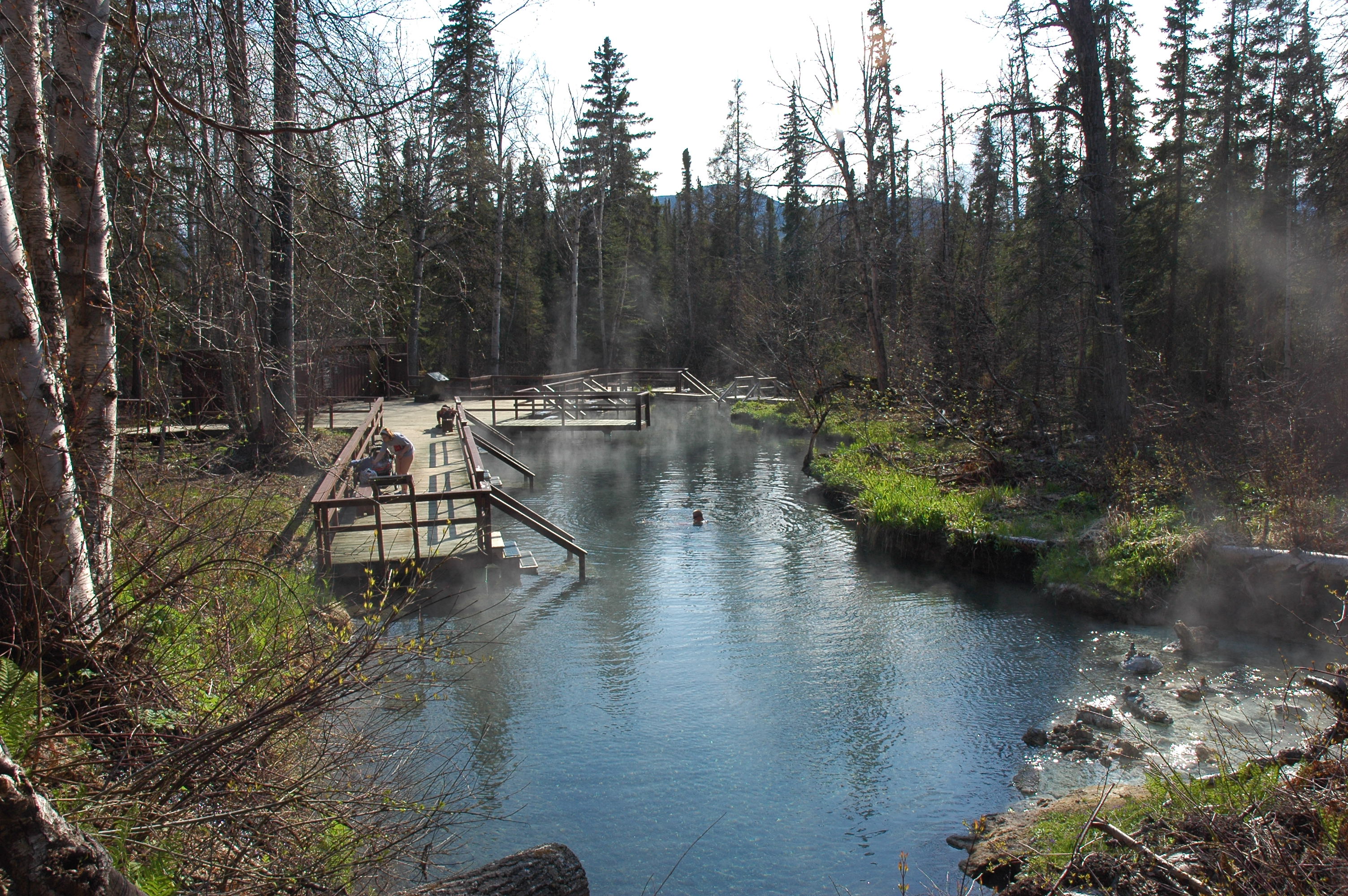
Alpha Pool at Liard River Hot Springs, British Columbia. Image by Lee Tengum / Wikimedia Commons, released into the public domain.
Quick Facts
- Location: Liard River Hot Springs Park, northern British Columbia, Canada
- Region: Northern Rockies
- Spring type: Natural geothermal hot spring system
- Public bathing area: Alpha Pool
- Water temperature: Approximately 42°C to 52°C / 108°F to 126°F
- Bathing: Permitted in the Alpha Pool during published pool hours
- Setting: Boreal spruce forest and geothermal wetland
- Access: Alaska Highway at approximately kilometre 765, followed by a developed boardwalk
- Management: BC Parks
- Open: Park access is described by BC Parks as year-round, subject to current advisories and conditions
- Pool hours: 7:00 am to 10:30 pm daily; BC Parks states no admission after 10:00 pm
- Lifeguards: None
- Facilities at the hot spring: Change house and composting toilet
- Day-use fee: Seasonal fee applies from May 1 to September 30
- Nearby major park: Muncho Lake Park, approximately 60 km south
- Major service centre: Fort Nelson, approximately 317 km southeast by the Alaska Highway
Why Visit
Liard River Hot Springs combines a natural geothermal spring with enough infrastructure to make soaking practical while retaining a strong wilderness character. The Alpha Pool sits within a lush northern forest reached by a boardwalk crossing a warm-water swamp. Geothermal heat changes the local environment enough to support an unusually rich plant community for this latitude, giving parts of the park a greener and more luxuriant appearance than the surrounding boreal landscape.
The experience is therefore broader than simply bathing in hot water. The approach through the wetland, the possibility of seeing wildlife, and the contrast between hot spring water and the northern climate are central parts of Liard’s identity.
Bathing Experience
The public soaking area is the Alpha Pool. BC Parks lists Alpha Pool water temperatures between approximately 42°C and 52°C / 108°F and 126°F. Temperatures vary within the pool, so visitors should not assume every part of the water feels the same.
The pool includes a shallow end and submerged benches. The setting remains natural in character even though the bathing area has been developed with access structures, a change house and sanitation facilities. There are no lifeguards on duty. Visitors are responsible for judging their own limits, supervising children closely and leaving the water if they become overheated, dizzy or unwell.
Location and Access
Liard River Hot Springs Park sits directly on the Alaska Highway in northern British Columbia at approximately kilometre 765. BC Parks places the park roughly 60 km north of Muncho Lake Park. Other official regional information places it approximately 317 km northwest of Fort Nelson. From the day-use area, visitors follow a developed boardwalk through the geothermal wetland to reach the Alpha Pool.
Map note:
- Approximate park coordinates: 59.425, -126.094.
- These coordinates identify the park area rather than a precise parking bay or pool entry point.
- Follow current highway signage and BC Parks directions on arrival.
- Road, wildfire, winter and maintenance conditions can change in this remote region.
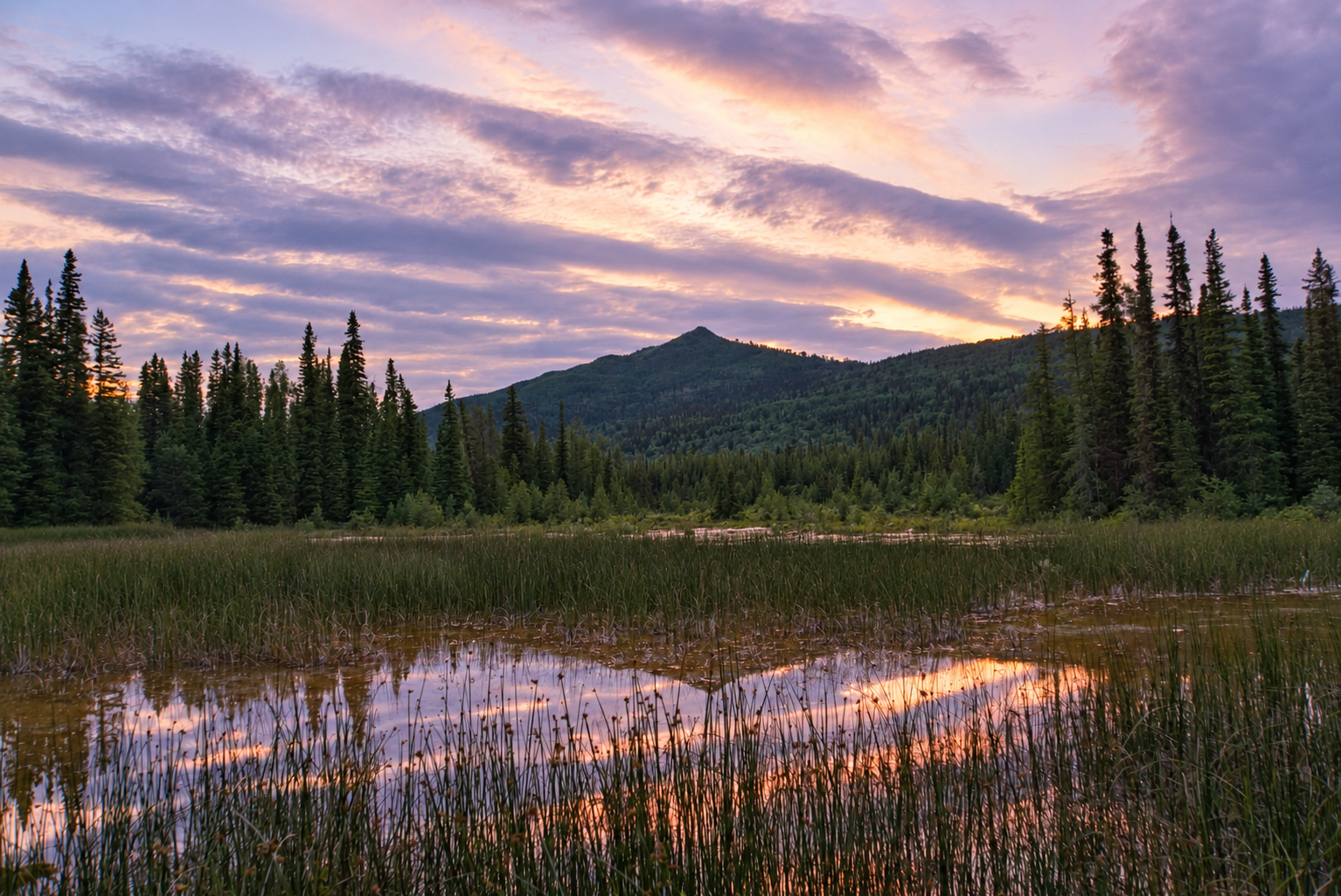
Geothermal wetland and boardwalk in Liard River Hot Springs Park. Image by Elisa Wilke / Wikimedia Commons, CC BY-SA 4.0.
Visitor Basics
- Natural geothermal hot springs in northern British Columbia.
- The public bathing area is the Alpha Pool.
- Water temperatures vary across the pool and can be very hot.
- The park is reached directly from the Alaska Highway.
- A developed boardwalk crosses a sensitive geothermal wetland.
- Visitors must stay on the boardwalk through the protected habitat.
- A change house and composting toilet are available near the hot spring.
- No lifeguards are on duty.
- Wildlife including moose may occur in and around the warm-water wetlands.
- Check BC Parks advisories before making a long-distance trip.
Entry Fees and Pool Hours
BC Parks currently applies a seasonal day-use fee from May 1 through September 30.
- Adult: $5
- Child: $3
- Family: $10
- Annual adult pass: $10
- Annual family pass: $20
BC Parks states that payment can be made at the staffed gatehouse using cash, credit or debit.
The Alpha Pool is listed as open from 7:00 am to 10:30 pm daily, with no admission after 10:00 pm.
Fees, operating arrangements and hours can change. Check the official BC Parks page before travelling.
Spring Type and Water
Liard River Hot Springs is a genuine natural geothermal spring complex rather than an artificially heated pool.
BC Parks explains that groundwater descends through folded and faulted sedimentary rock, is heated underground and returns to the surface along natural faults. Minerals carried by the water are deposited around the springs, including calcium carbonate that forms tufa.
About eight pools make up the wider hot-spring complex, but the Alpha Pool is the public bathing area highlighted by BC Parks.
The most distinctive hydrological feature is that the thermal water does not simply empty into a nearby river. Instead, it feeds an intricate system of warm swamps that remain influenced by geothermal heat throughout the year.
Ecology and the Warm-Water Wetland
The geothermal wetland is one of the strongest reasons Liard River Hot Springs deserves protection.
BC Parks says the hot springs complex is of national ecological significance. The warm swamps create a local microclimate that supports plant communities unusual for a boreal location at this latitude.
The park supports roughly 250 plant species, including thermally influenced species, orchids and luxuriant fern growth around the warm-water environment.
Because the habitat is sensitive, visitors are required to remain on the boardwalk while crossing the wetland.
Wildlife
Liard River Hot Springs is also a wildlife-viewing area, not just a bathing destination.
BC Parks records more than one hundred bird species and dozens of mammal species in the park. Moose are year-round residents and may feed in the warm-water swamps.
Small lake chub can also be seen in warm pools beside the boardwalk. Their ability to survive in the thermally influenced water is one of the park's unusual ecological features.
Wild animals should never be approached or fed. Follow current BC Parks wildlife-safety advice and keep food and scented items secured.
Safety and Etiquette
- Remember that some parts of the Alpha Pool can be much hotter than others.
- Enter slowly and leave the water if you feel overheated, dizzy or unwell.
- Supervise children closely around hot water and wet surfaces.
- There are no lifeguards on duty.
- Stay on designated boardwalks and trails through the geothermal wetland.
- Do not damage tufa, vegetation or geothermal features.
- Do not approach or feed moose, bears or other wildlife.
- Keep pets under control and follow all BC Parks pet restrictions.
- Pack out rubbish and follow posted sanitation rules.
- Check wildfire, highway, weather and park advisories before travelling.
Best Time to Visit
Liard River Hot Springs can be visited in every season, but the character of the trip changes dramatically through the year.
Summer brings the easiest road-trip conditions for many travellers and is also the busiest period. BC Parks notes that the campground can fill early during summer.
Autumn can bring cooler air temperatures and quieter conditions, while winter creates the classic contrast between freezing northern air and hot geothermal water.
Winter travel on the Alaska Highway requires more preparation. Visitors should check road conditions, weather, daylight, fuel availability and park advisories before setting out.
There is no single guaranteed best month. The right season depends on whether you prioritise easier road access, warmer weather, smaller crowds or a winter soaking experience.
Camping and Nearby Services
Liard River Hot Springs Park includes frontcountry camping, and camping reservations are managed through the BC Parks reservation system.
The park is remote. Travellers should not assume that fuel, food, mobile reception or other services will be continuously available along the surrounding Alaska Highway.
Muncho Lake Park lies roughly 60 km to the south, while Fort Nelson is the major regional service centre roughly 317 km southeast of Liard River Hot Springs.
Plan fuel, food, water and emergency supplies before travelling through northern British Columbia.
Nearby Attractions
- Muncho Lake Park.
- The Alaska Highway.
- Liard River Corridor protected landscapes.
- Northern Rocky Mountains wilderness areas.
- Wildlife-viewing opportunities along the Northern Rockies section of the Alaska Highway.
FAQ
Is Liard River Hot Springs natural?
Yes. Liard is a natural geothermal spring complex. The public Alpha Pool has developed access and bathing infrastructure, but the thermal water itself is naturally heated underground.
How hot is Liard River Hot Springs?
BC Parks lists the Alpha Pool at approximately 42°C to 52°C / 108°F to 126°F. Temperature varies across the pool.
Can you swim or soak at Liard River Hot Springs?
Yes. Public bathing is permitted in the Alpha Pool during the posted operating hours.
Is Liard River Hot Springs open year-round?
BC Parks describes the park as open year-round, but access, facilities and advisories can change. Always check the official park page before travelling.
Are there lifeguards?
No. BC Parks states that there are no lifeguards on duty.
Do you have to pay to use Liard River Hot Springs?
A seasonal day-use fee applies from May 1 to September 30 under the current BC Parks fee schedule for this park.
Where is Liard River Hot Springs?
The park is on the Alaska Highway in northern British Columbia, approximately 60 km north of Muncho Lake Park and roughly 317 km northwest of Fort Nelson.
What makes Liard River Hot Springs unusual?
The geothermal outflow feeds a warm-water wetland rather than simply flowing straight into a river or creek. This creates a distinctive microclimate and supports unusually rich plant and wildlife communities.
What other Canadian hot spring can I compare it with?
Radium Hot Springs in Kootenay National Park offers a much more developed thermal-pool experience and makes a useful contrast with Liard's northern boreal setting.
Sources / Last Checked
Primary sources checked:
- BC Parks — Liard River Hot Springs Park.
- Tourism Northern Rockies — Liard River Hot Springs Provincial Park.
- Tourism Northern Rockies — regional visitor information.
Images:
- Alpha Pool photograph by Lee Tengum / Wikimedia Commons — public domain.
- Boardwalk and wetland photograph by Elisa Wilke / Wikimedia Commons — CC BY-SA 4.0.
Last checked: 16 September 2026.