Hot Springs Cove
Natural geothermal mineral hot springs in Nism̓aakqin Park on Vancouver Island's west coast, reached by boat or float plane and a 2 km boardwalk through coastal rainforest.
Hot Springs Cove is the familiar travel name for a natural geothermal soaking destination in Nism̓aakqin Park in Clayoquot Sound on the west coast of Vancouver Island, British Columbia. BC Parks identifies the springs by their ʕaḥuusʔatḥ (Ahousaht) name, mux̣ʷšiƛa (mahkw-shith-ah), meaning “steaming from rock”. The park itself was renamed from Maquinna Marine Park to Nism̓aakqin Park in 2025.
The springs are unusual because hot mineral water cascades through a rocky coastal setting into a series of natural pools that become progressively cooler as the geothermal water mixes with colder ocean water.
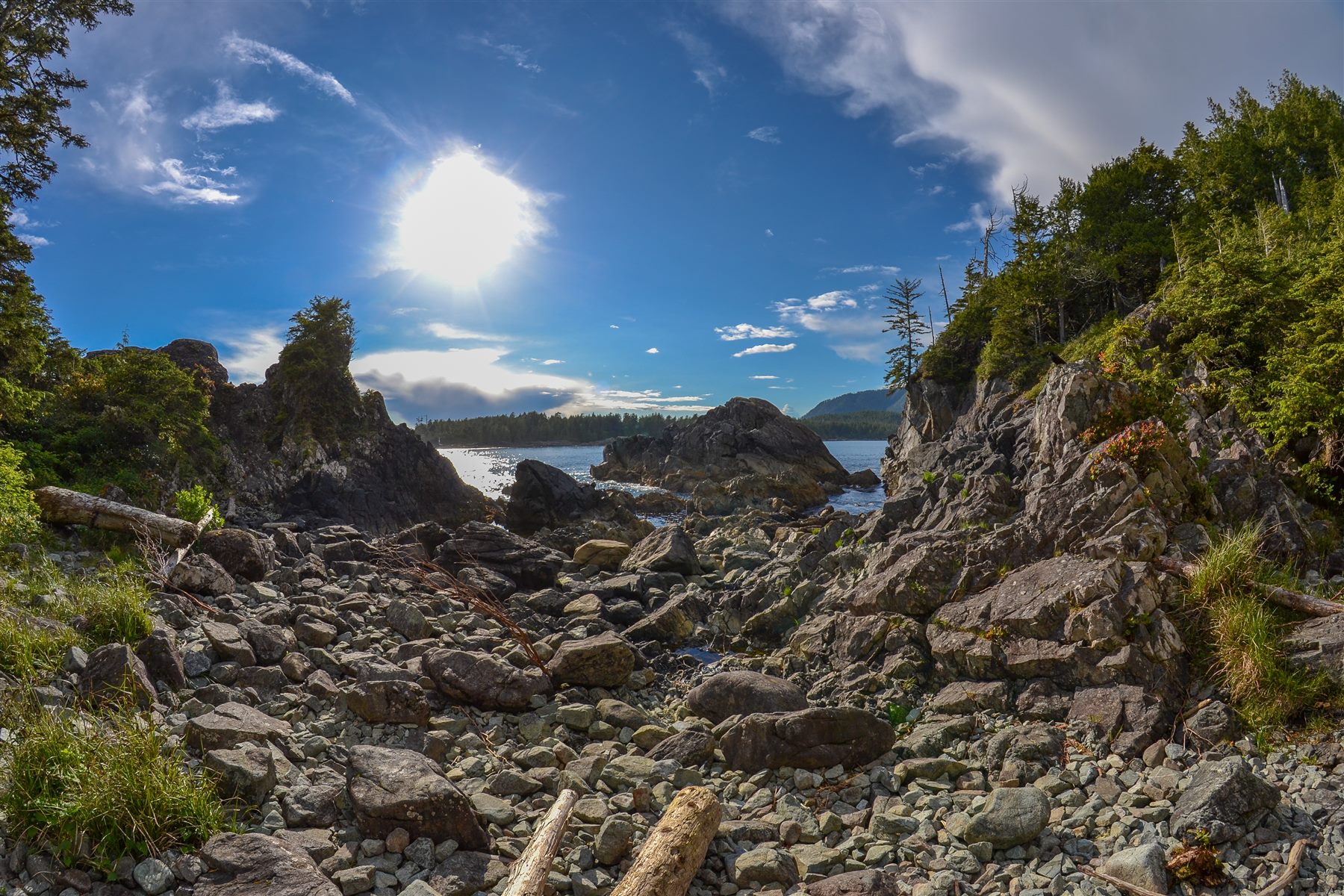
Hot Springs Cove, British Columbia. Photo: Kevin He / Wikimedia Commons. Licensed under CC BY-SA 2.0.
Quick Facts
- Location: Nism̓aakqin Park, Clayoquot Sound, west coast of Vancouver Island, British Columbia, Canada
- Nearest practical travel base: Tofino
- Spring type: Natural geothermal mineral hot springs
- Bathing: Soaking is a recognised visitor activity in the natural hot spring pools
- Pool temperature: Variable; BC Parks does not publish one fixed pool temperature
- Number of pools: BC Parks describes six rocky pools
- Access: Boat or float plane, then a 2 km boardwalk
- Management: BC Parks in partnership with ʕaḥuusʔatḥ (Ahousaht) interests
- Current park name: Nism̓aakqin Park
- Former park name: Maquinna Marine Park
- Camping at the hot springs: Prohibited
- Campfires at the hot springs: Prohibited
- Pets: Not permitted beyond the start of the boardwalk in the hot springs area
- Alcohol: Not allowed in the park
- Glass containers: Not permitted in and around the pools
- Key hazard: High tides, ocean swells and cold seawater can affect the pools
Why Visit
Hot Springs Cove stands out because it combines a genuine natural geothermal system with a remote Pacific-coast setting. The hot spring water descends through rocky terrain into a sequence of natural pools. BC Parks explains that the pools flow from one level to the next and gradually cool as the hot fresh water is mixed and cooled by ocean swells.
That relationship between geothermal water and the sea creates a very different experience from an inland hot spring, bore bath or developed thermal pool. The destination is also part of a culturally important landscape. BC Parks notes that Nism̓aakqin Park contains places of cultural, historic and spiritual importance to nuučaańuł (Nuu-chah-nulth) First Nations.
Name and Cultural Context
Older guidebooks, tourism pages and maps may refer to this destination simply as Hot Springs Cove or place it within Maquinna Marine Park. Current BC Parks information uses the name Nism̓aakqin Park, which replaced Maquinna Marine Park in 2025.
The hot springs themselves are identified as mux̣ʷšiƛa, the ʕaḥuusʔatḥ name meaning “steaming from rock”. Using the current names matters because the hot springs are not only a recreation site. They are part of a living Indigenous cultural landscape with continuing significance to the ʕaḥuusʔatḥ and other nuučaańuł peoples.
Bathing Experience
BC Parks describes six natural rocky pools fed by geothermal water. The hottest water enters higher in the system, while pools become progressively cooler as the water moves downward and mixes with ocean water.
There is no single reliable temperature that applies to every pool. Conditions can change with:
- tide height
- ocean swell
- weather
- wave action
- geothermal flow
- the amount of cold seawater entering the pools
Visitors should test the water before entering and avoid assuming that a pool will feel the same as it did on a previous visit. BC Parks also states that there are no lifeguards on duty.
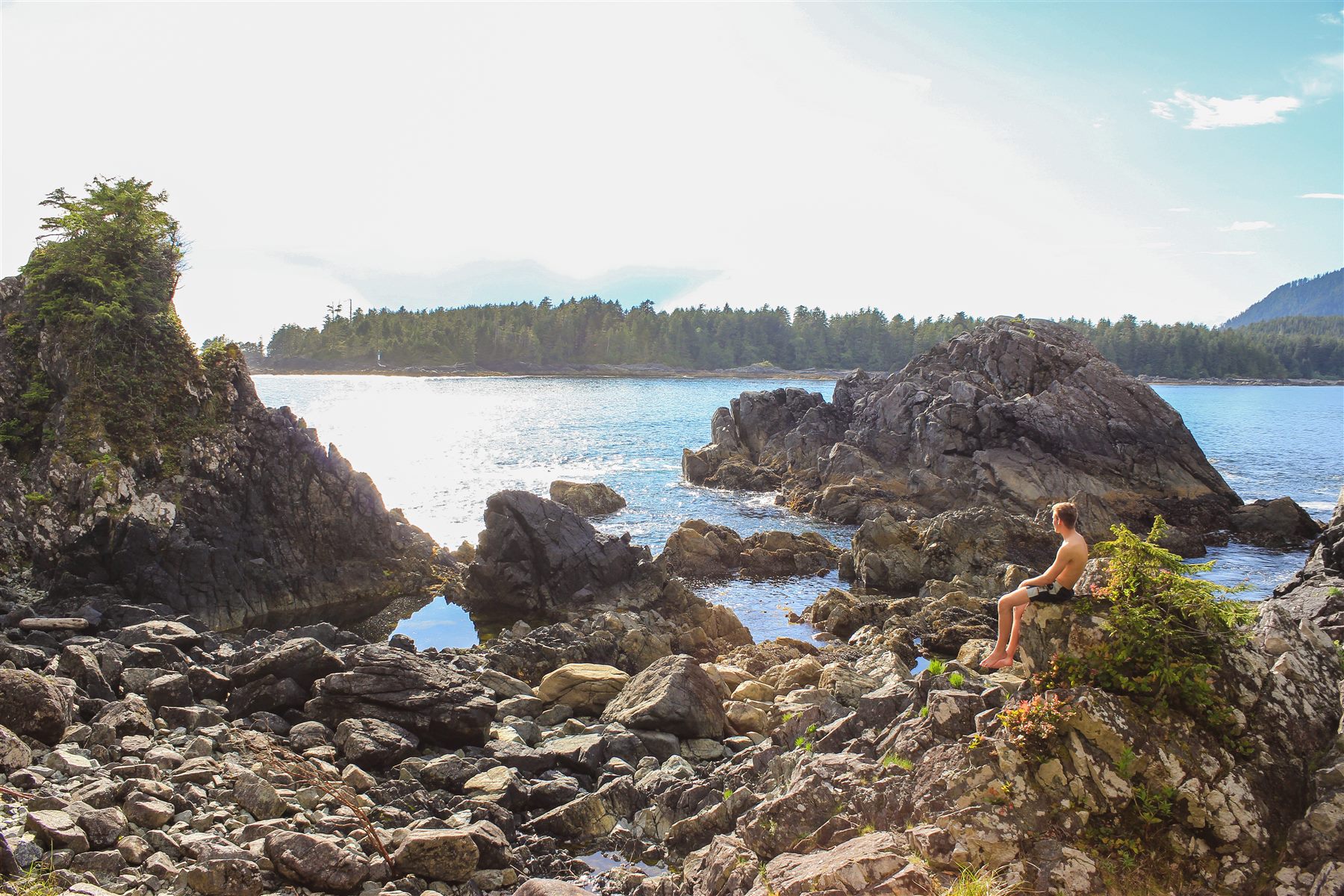
Natural rocky pools at Hot Springs Cove, British Columbia. Photo: Kevin He / Wikimedia Commons. Licensed under CC BY-SA 2.0.
Location and Access
Nism̓aakqin Park is in the northwestern part of Clayoquot Sound on Vancouver Island’s west coast. There is no ordinary road approach to the hot springs. BC Parks states that the park is accessible by boat and float plane from locations including:
- Tofino
- Ucluelet
- Hot Springs Cove
- Tahsis
- Gold River
Commercial operators providing vessel drop-offs or guiding services in the park must hold a valid park-use permit. After arriving at the dock, visitors follow a 2 km boardwalk trail to the hot springs. BC Parks warns that the boardwalk can become slippery because of:
- frost
- wet conditions
- rotting leaves
- seasonal weather
Stay on the designated boardwalk and trails. Shortcutting damages vegetation and soil.
Map note:
- Approximate hot-spring coordinates: 49.348889, -126.259722.
- These coordinates correspond to the officially named Ramsay Hot Spring in Natural Resources Canada geographical-name data.
- Do not use coordinates alone for marine navigation.
- Use current BC Parks maps, marine charts and a permitted transport operator when required.
Visitor Basics
- Natural geothermal mineral hot springs on the west coast of Vancouver Island.
- Located in Nism̓aakqin Park in Clayoquot Sound.
- Formerly associated with the name Maquinna Marine Park.
- Known to ʕaḥuusʔatḥ as mux̣ʷšiƛa, meaning “steaming from rock”.
- Access is by boat or float plane rather than by road.
- A 2 km boardwalk leads from the dock to the hot springs.
- BC Parks describes six natural rocky pools.
- Pool temperatures vary because hot geothermal water mixes with colder ocean water.
- There are no lifeguards on duty.
- Visitors should check tides and marine conditions before travelling.
Entry, Rules, and Conditions
Nism̓aakqin Park is a protected provincial park and culturally important landscape, not an unregulated bathing site.
BC Parks prohibits alcoholic beverages in the park.
Glass containers are not permitted in and around the hot spring pools.
Pets are not allowed in the hot springs area beyond the start of the boardwalk.
Camping and campfires are prohibited in the mux̣ʷšiƛa hot springs area on the southern part of Openit Peninsula.
Commercial guides and vessel drop-off operators must hold the required BC Parks park-use permit.
Access check: Review the current Nism̓aakqin Park page and BC Parks active advisories before travelling.
Spring Type and Water
Hot Springs Cove is a genuine natural geothermal mineral spring system.
BC Parks describes geothermal spring water cascading down a waterfall into six rocky pools.
The pools are connected, with water flowing from one level to the next. The geothermal water becomes progressively cooler as it is cooled by ocean swells and mixed with colder seawater.
Because the pools interact directly with the coastal environment, visitors should not expect a fixed or controlled bathing temperature.
The spring system is therefore fundamentally different from a heated swimming pool, constructed spa or bore-fed bath.
Tides, Waves, and Coastal Safety
The ocean is an important part of the Hot Springs Cove experience and also one of its main hazards.
BC Parks advises visitors to avoid the hot springs during high tides and high swells.
During winter high tides, cold seawater can fill the pools. Rough water and floating wood debris can cause injury.
Check tide tables and speak with your tour operator, air carrier or water-taxi provider before visiting.
The west coast of Vancouver Island is also exposed to tsunami risk. If strong earthquake shaking occurs, or if the ocean suddenly recedes, move immediately to higher ground and follow emergency instructions.
Safety and Etiquette
- Test water temperature before entering any pool.
- Remember that temperatures can change with tide and ocean conditions.
- Avoid visiting during dangerous high tides or high swells.
- Take care on slippery rock and wet boardwalk surfaces.
- There are no lifeguards on duty.
- Keep glass away from the pool area.
- Do not bring alcohol into the park.
- Keep pets out of the restricted hot springs area.
- Stay on designated trails and the boardwalk.
- Do not damage vegetation, rock features or cultural sites.
- Pack out rubbish and follow all BC Parks instructions.
- Respect the cultural importance of mux̣ʷšiƛa and the wider Nism̓aakqin landscape.
Cultural and Environmental Respect
Nism̓aakqin Park contains places of cultural, historic and spiritual significance to nuučaańuł First Nations.
BC Parks and ʕaḥuusʔatḥ representatives have developed a visitor-use management strategy specifically for the mux̣ʷšiƛa hot springs area.
The current park naming and visitor-management approach reflect a broader effort to recognise Indigenous stewardship, cultural knowledge and continuing connection to the landscape.
Visitors should remain on established access routes, respect posted rules and avoid treating the springs as an ordinary tourist pool.
Best Time to Visit
There is no single guaranteed best season because marine conditions can matter as much as air temperature.
BC Parks specifically warns that winter high tides can fill the hot spring pools with cold seawater and that rough water and floating debris may create hazards.
Fall and winter can also make the 2 km boardwalk more slippery because of frost, wet leaves and persistent coastal moisture.
Before travelling at any time of year, check:
- BC Parks advisories.
- Marine weather.
- Tide tables.
- Conditions reported by your permitted tour operator or transport provider.
Nearby Attractions
- Clayoquot Sound.
- Tofino.
- Coastal rainforest of western Vancouver Island.
- Marine wildlife viewing.
- Sea kayaking in suitable conditions.
- Flores Island and surrounding protected coastal landscapes.
- Pacific-coast beaches and inlets of the Clayoquot Sound region.
Where to Stay Nearby
Camping is not permitted in the mux̣ʷšiƛa hot springs area.
BC Parks directs visitors to use the private campground located north of the park where appropriate.
For many visitors, Tofino is the most practical base because it has accommodation, food, transport operators and marine-tour services.
Do not assume that an overnight stay is permitted near the pools or dock. Check current BC Parks information and use only legal accommodation or camping areas.
FAQ
Is Hot Springs Cove natural?
Yes. The springs are a natural geothermal mineral spring system in Nism̓aakqin Park on Vancouver Island's west coast.
What is the current name of Maquinna Marine Park?
The park was renamed Nism̓aakqin Park in 2025.
What is mux̣ʷšiƛa?
mux̣ʷšiƛa is the ʕaḥuusʔatḥ name for the hot springs and means “steaming from rock”.
Can you soak at Hot Springs Cove?
Yes. BC Parks identifies soaking in the natural hot spring pools as a visitor activity, subject to current park rules and conditions.
How many pools are there?
BC Parks describes six rocky pools fed by the geothermal spring system.
How hot is Hot Springs Cove?
There is no single fixed pool temperature published by BC Parks. The pools become progressively cooler as geothermal water mixes with colder ocean water.
Can you drive to Hot Springs Cove?
No ordinary road reaches the hot springs. Access is by boat or float plane, followed by a 2 km boardwalk.
Can you camp at the hot springs?
No. Camping and campfires are prohibited in the mux̣ʷšiƛa hot springs area.
Are dogs allowed at the hot springs?
No. Pets are not permitted beyond the start of the boardwalk in the hot springs area.
What town is the main travel base?
Tofino is one of the main practical departure points for permitted water and air access to Nism̓aakqin Park.
Sources / Last Checked
Primary sources checked:
- BC Parks — Nism̓aakqin Park.
- BC Parks — Active Advisories.
- BC Parks / ʕaḥuusʔatḥ — Nism̓aakqin Park mux̣ʷšiƛa Hot Springs Visitor Use Management Strategy.
- Natural Resources Canada geographical-name data — Ramsay Hot Spring and Hot Springs Cove.
- Wikimedia Commons — Hot Springs Cove Tofino photograph by Kevin He.
Image: Kevin He / Wikimedia Commons, CC BY-SA 2.0.
Last checked: 7 September 2026.
Publishing note: Re-check BC Parks advisories, marine weather, tides and access-provider information immediately before changing this page from draft to published.