Deep Creek Hot Springs
Natural thermal hot springs along Deep Creek in California's San Bernardino National Forest, reached by backcountry hiking and known for creekside soaking pools.
Deep Creek Hot Springs is a group of natural thermal soaking pools beside Deep Creek in California’s San Bernardino National Forest. The setting is undeveloped and scenic, with creekside pools reached by backcountry trails rather than a developed spa or resort.
The U.S. Forest Service describes the thermal springs within the Deep Creek corridor as regionally important, and Recreation.gov notes that the Pacific Crest Trail follows Deep Creek through this part of the national forest.
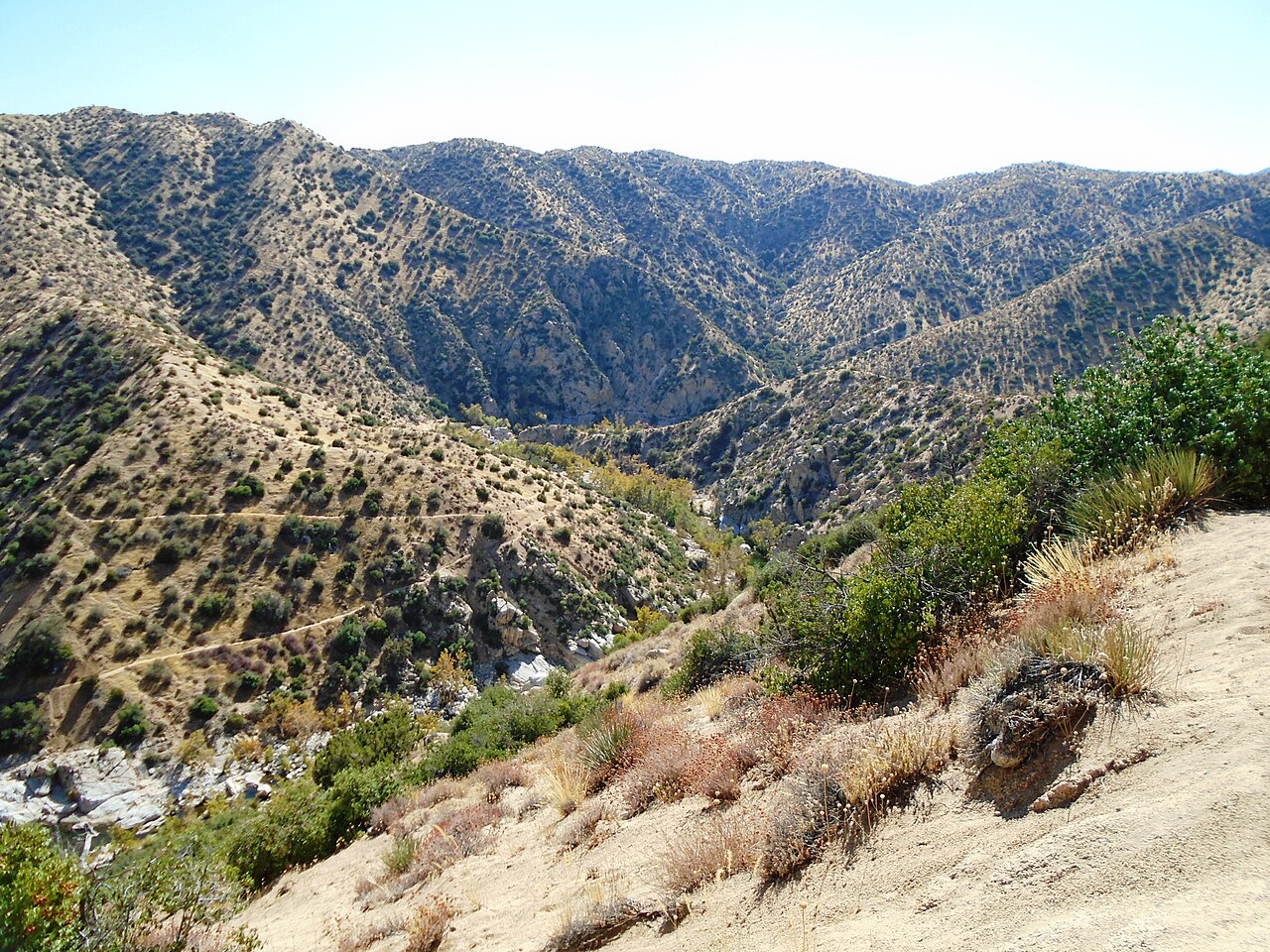
Deep Creek Hot Springs viewed from the trail. Photo: Beyond My Ken / Wikimedia Commons, CC BY-SA 4.0.
Quick facts
- Setting: Natural creekside hot springs
- Managing area: San Bernardino National Forest
- County: San Bernardino County, California
- Nearest communities: Hesperia and Apple Valley area
- Access: Backcountry hiking
- Facilities at the springs: Primitive / undeveloped
- Use: Day-use backcountry recreation
- Trail character: Steep terrain with a demanding climb back out
- Current conditions: Always confirm forest, weather and trail conditions before visiting
What makes Deep Creek Hot Springs different?
Deep Creek is not a developed thermal pool complex. The appeal is the combination of naturally heated water, a wild creek corridor and a rugged Southern California landscape. The surrounding drainage is environmentally significant. Recreation.gov says Deep Creek supports unusually diverse wildlife habitat within the San Bernardino National Forest and identifies the creek as a California Wild Trout Stream. The Pacific Crest Trail also follows the creek for part of its route.
Because this is a natural site, pool depth, temperature and creek conditions can vary. Visitors should not expect controlled temperatures, lifeguards, paved access or resort-style facilities.
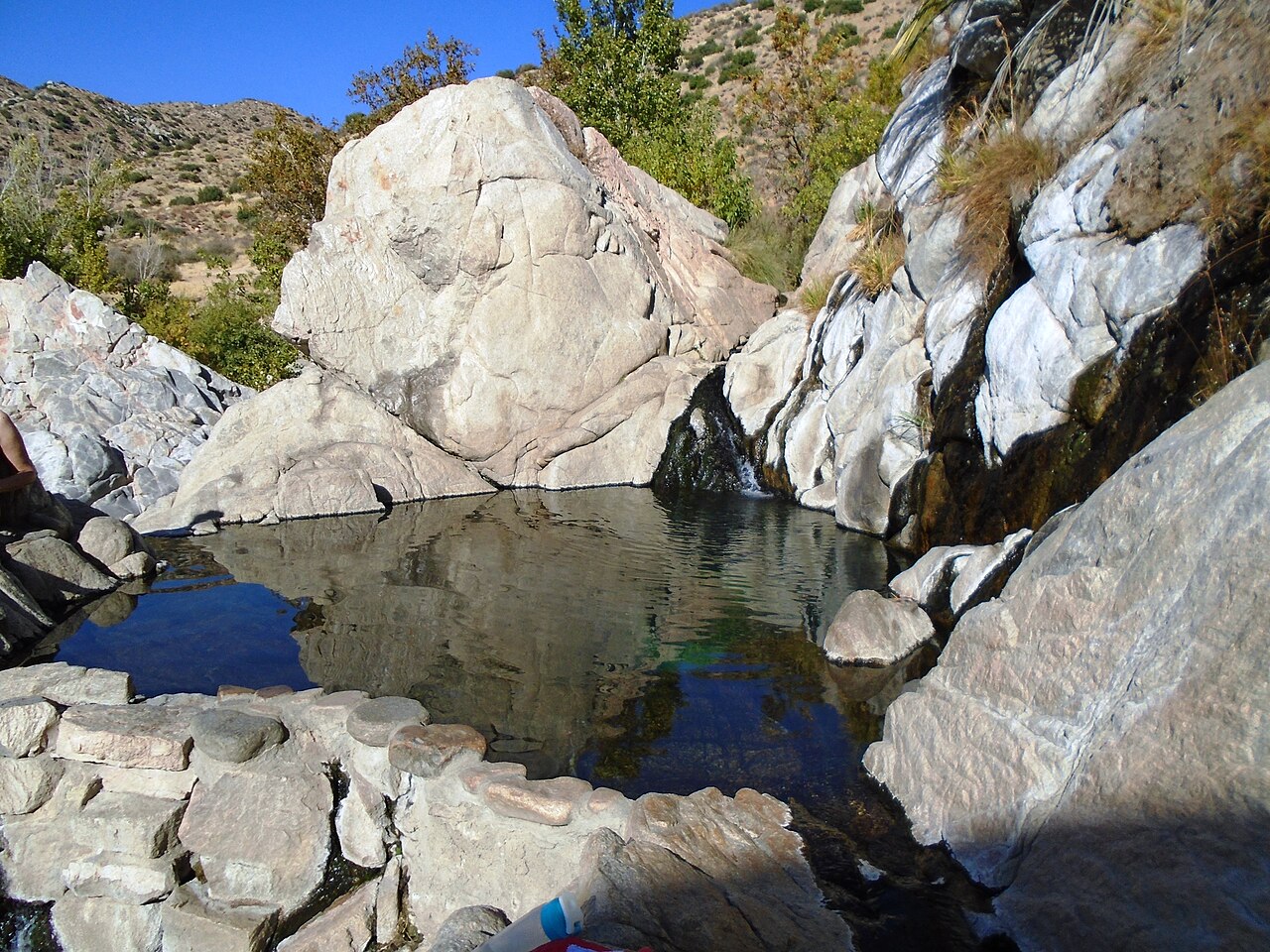
One of the natural hot pools at Deep Creek Hot Springs. Photo: Beyond My Ken / Wikimedia Commons, CC BY-SA 4.0.
Access and trail conditions
Deep Creek Hot Springs requires a genuine backcountry outing rather than a roadside stop. The terrain around Deep Creek is steep and exposed in places, and the return hike can be much harder than the descent. Conditions can also change because of heat, storms, wildfire restrictions, trail damage or temporary forest closures. Before travelling:
- check the San Bernardino National Forest for current alerts and closures
- check the weather forecast for the Deep Creek / Hesperia area
- carry enough drinking water for the hike in and out
- allow enough daylight for the return climb
- do not rely on mobile reception being available
- turn around if heat, water levels or trail conditions make the trip unsafe
The Forest Service currently lists Deep Creek Hot Springs as an open recreation destination, but that status can change and should be checked again immediately before a visit.
Soaking and water safety
These are untreated natural hot springs. Natural hot spring water is not disinfected or monitored in the same way as a commercial pool. Avoid swallowing the water, and take extra care to keep untreated warm freshwater out of your nose.
San Bernardino County Public Health specifically warns about Naegleria fowleri, a rare amoeba that can live in warm freshwater. The county documents a fatal 1991 infection following exposure at Deep Creek Hot Springs. The infection is rare, but the consequences can be extremely serious. Risk is associated with contaminated water entering the nose rather than with drinking the water. Practical precautions include:
- avoid putting your head underwater
- avoid jumping or diving into warm pools
- prevent warm freshwater from entering the nose
- supervise children carefully
- leave the water if you feel unwell, overheated or dizzy
This information is not a substitute for current public-health advice. Check official health guidance before visiting.
Heat and dehydration
The hike deserves as much attention as the springs themselves. Deep Creek lies in an area where summer temperatures can become severe, and San Bernardino County emergency records document rescues of dehydrated hikers in the Deep Creek Hot Springs area. Plan conservatively:
- carry more water than you expect to need
- avoid starting a strenuous return climb during extreme heat
- use sun protection
- carry food and electrolytes
- wear suitable hiking footwear
- know your turnaround time
A soak at the bottom of the canyon does not reduce the difficulty of the hike back out.
Day-use setting
Forest planning documents identify continued day use at Lower Deep Creek and retain foot access to Deep Creek Hot Springs and the Pacific Crest Trail. Treat the springs as a fragile backcountry site:
- pack out everything you bring in
- avoid soap, shampoo and detergents in the pools or creek
- do not alter or enlarge soaking pools
- avoid damaging creek banks and vegetation
- respect wildlife habitat
- follow current fire restrictions and forest rules
When is the best time to visit?
There is no single guaranteed best season because access and weather vary. The most important factors are:
- current air temperature
- recent storms
- creek conditions
- trail condition
- wildfire or forest restrictions
- daylight available for the return hike
Extreme heat can make the hike dangerous even when the pools themselves are appealing. Check the forecast and official forest information rather than relying only on seasonal averages.
What should you bring?
For a typical visit, consider:
- plenty of drinking water
- sturdy hiking footwear
- sun protection
- food and electrolytes
- a first-aid kit
- offline navigation
- a towel and dry clothing
- a rubbish bag for packing out waste
- enough time to complete the return hike before dark
Do not rely on the hot springs or creek as a safe drinking-water source without appropriate treatment.
Wildlife and environmental importance
Deep Creek is more than a soaking destination. Recreation.gov describes the drainage as supporting exceptional wildlife diversity and notes habitat for the endangered Southwestern Arroyo Toad. Visitors should stay on established routes where possible and avoid disturbing sandy creek-bank habitat. Responsible access helps protect both the springs and the broader creek corridor.
Frequently asked questions
Are Deep Creek Hot Springs natural?
Yes. They are naturally heated thermal springs beside Deep Creek rather than a constructed or commercially heated pool.
Are Deep Creek Hot Springs inside a resort?
No. The springs are in a backcountry setting associated with the San Bernardino National Forest.
Can you soak at Deep Creek Hot Springs?
The site is known for natural soaking pools, but visitors should check current Forest Service conditions and public-health guidance before entering the water.
Is the walk easy?
No. Access involves backcountry hiking and steep terrain, and the return climb can be demanding, especially in hot weather.
Are the pools treated or chlorinated?
No. They are natural, untreated hot spring pools.
Is there a health risk in the water?
Warm freshwater can carry microorganisms. San Bernardino County Public Health has specifically warned about the rare but serious risk from Naegleria fowleri and documents a historical fatal case associated with Deep Creek Hot Springs.
Is Deep Creek Hot Springs open?
The U.S. Forest Service currently lists the destination as open, but closures and access conditions can change. Check the Forest Service again before travel.
Sources and useful links
- U.S. Forest Service — San Bernardino National Forest
- U.S. Forest Service — Deep Creek Hot Springs destination listing
- Recreation.gov — Deep Creek Hot Springs
- San Bernardino County Public Health — Naegleria fowleri information
- San Bernardino County Regional Parks — Mojave River Forks Regional Park
- Wikimedia Commons — Deep Creek Hot Springs trail-view image
- Wikimedia Commons — Deep Creek Hot Springs hot-pool image


Information checked 13 October 2026. Conditions, closures and access rules can change, so verify official sources before travelling.