Dalhousie Springs
Natural artesian mound springs in Witjira National Park, South Australia, known for a warm main spring, remote desert scenery, Great Artesian Basin water, and significant cultural and ecological values.
Dalhousie Springs is a remarkable natural mound-spring complex in Witjira National Park in the far north of South Australia. Fed by the Great Artesian Basin, the springs form a warm-water oasis within an otherwise dry and remote desert landscape.
The main spring is the best-known visitor bathing area. South Australia’s National Parks and Wildlife Service lists its water at around 37°C and permits swimming there, while the surrounding mound-spring system is protected for its natural, cultural and ecological importance. Dalhousie is not a constructed bore bath or commercial thermal spa. It is a natural artesian spring system where groundwater rises from considerable depth through cracks and fissures before reaching the surface.
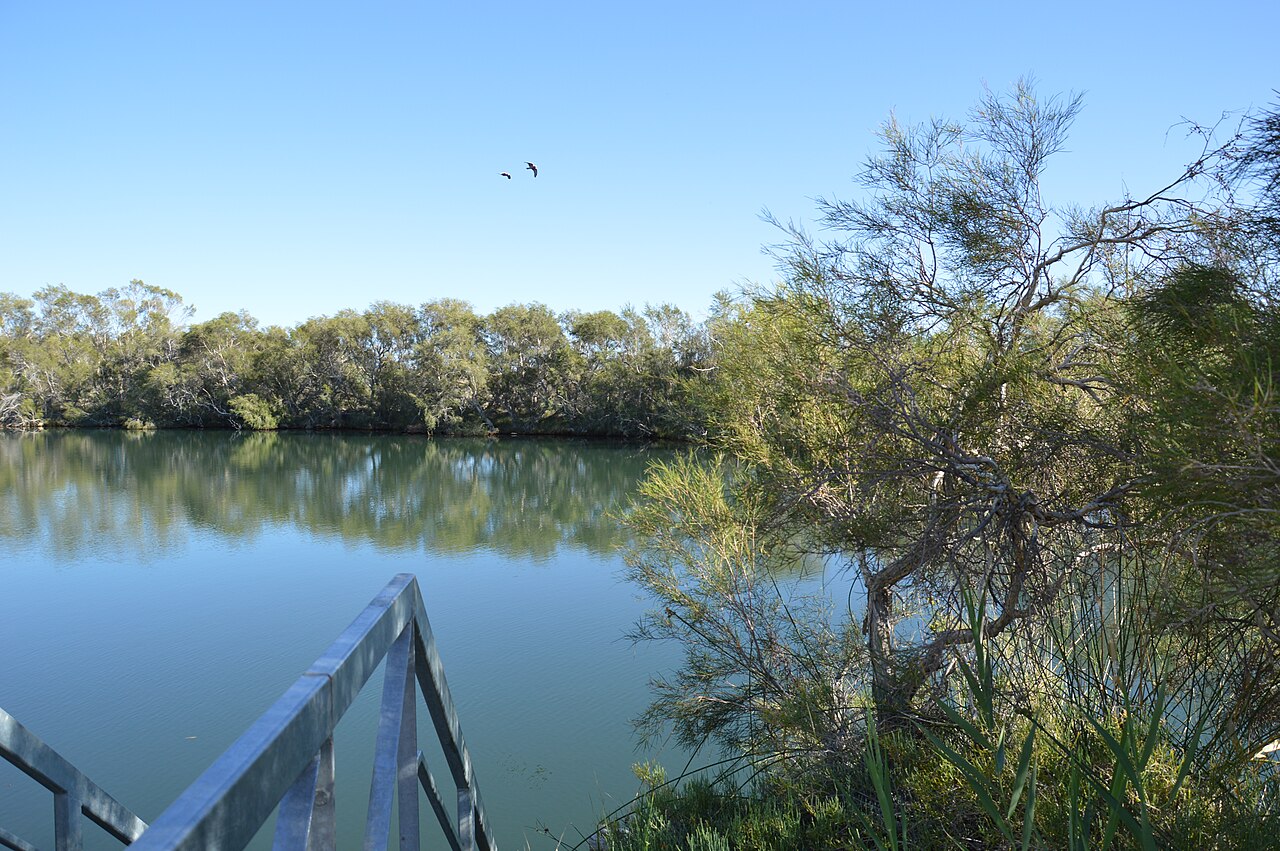
The main bathing spring at Dalhousie Springs in Witjira National Park, South Australia. Photo: Tandrew22 / Wikimedia Commons, licensed under CC BY-SA 4.0.

Quick Facts
- Location: Witjira National Park, Far North, South Australia
- Nearest practical town: Oodnadatta
- Spring type: Natural artesian mound springs
- Water source: Great Artesian Basin
- Main spring temperature: Around 37°C
- Bathing allowed: Yes, in the main spring
- Access: Remote 4WD access
- Management: National Parks and Wildlife Service South Australia
- Setting: Remote desert oasis and protected mound-spring complex
- Camping: Dalhousie Springs Campground; booking required before arrival
- Best time: April to September is recommended by SA National Parks
- Nearby service point: Mount Dare
- Road check: Always consult the current Desert Parks Bulletin before travel
Why Visit
Dalhousie Springs combines naturally warm water with one of the most distinctive landscapes in Australia’s inland desert country. The springs are part of a much larger mound-spring complex associated with the Great Artesian Basin. In a region defined by extreme dryness, permanent artesian water has created an ecological refuge, a place of deep cultural significance and a memorable destination for travellers crossing the South Australian outback.
The main spring offers the unusual experience of soaking in naturally warm water while surrounded by a remote arid landscape rather than a resort, bathhouse or developed urban pool. For NHSNM, Dalhousie is especially important because it demonstrates the difference between a natural artesian spring and the constructed bore-fed bathing pools found elsewhere in inland Australia.
Bathing Experience
Swimming is permitted in the main Dalhousie spring. South Australia’s National Parks and Wildlife Service lists the water at around 37°C, making it naturally warm rather than extremely hot. The main spring is unusual because much of the wider mound-spring environment is environmentally and culturally sensitive. The Witjira National Park management plan explains that swimming is generally not compatible with protecting healthy mound springs, but the main Dalhousie pool is an exception because of its size and high water flow.
Visitors should therefore treat the main pool as a specific permitted bathing area rather than assuming every spring within the wider complex can be entered. Always follow current signs, park instructions and any temporary restrictions.
Location and Access
Dalhousie Springs is located within Witjira National Park in the far north of South Australia, close to the western edge of the Simpson Desert region. This is a remote outback destination, not a simple roadside stop. SA National Parks lists access to the Dalhousie Springs Campground as 4WD only.
Official access information identifies several possible approaches, including routes through Oodnadatta from South Australia and approaches from the Northern Territory through Kulgera, Finke, New Crown and Charlotte Waters. Road and track conditions can change quickly after rain. The official Desert Parks Bulletin warns travellers not to drive after rain until tracks have dried.
Map note:
- Add verified public-facing coordinates before publication if required by the spring map.
- Treat campground, swimming area and road-access coordinates separately where appropriate.
- Do not rely on an ordinary road map alone for remote-track conditions.
- Check the Desert Parks Bulletin immediately before travel.
Visitor Basics
- Located in Witjira National Park in far northern South Australia.
- The main spring is naturally warm at around 37°C.
- Swimming is permitted in the main spring.
- The wider site is a protected natural mound-spring complex.
- Access to the Dalhousie Springs Campground is listed as 4WD only.
- Visitors should be self-sufficient and prepared for remote desert travel.
- Carry adequate drinking water, food, fuel and suitable emergency supplies.
- Camping at Dalhousie Springs must be booked before arrival.
- Toilets are available at the Dalhousie Springs Campground.
- Current road and track conditions should always be checked before departure.
Entry, Camping, and Park Conditions
Witjira National Park is a remote desert park, so visitors should treat entry and camping arrangements as part of the trip rather than something to organise after arrival.
Vehicle entry fees apply, and SA National Parks advises visitors who are not travelling east of Dalhousie Springs into the Munga-Thirri–Simpson Desert area to book and pay for vehicle entry and camping online before arrival. Campsites at Dalhousie Springs also need to be booked in advance.
A Desert Parks Pass becomes mandatory for travellers continuing east of Dalhousie Springs toward Munga-Thirri–Simpson Desert National Park, and it is also required for some other camping and access areas within the desert-park network.
Park and booking information: Check the official Witjira National Park page for current entry, camping, access and visitor information.
Dalhousie campground: Current camping information and availability can be checked through the official Dalhousie Springs Campground page.
Spring Type and Water
Dalhousie Springs is a natural artesian mound-spring system associated with the Great Artesian Basin.
SA National Parks explains that artesian water rises from considerable depth through cracks and fissures in underground rock layers before reaching the surface. The main Dalhousie spring is listed at around 37°C.
This makes Dalhousie fundamentally different from a constructed bore bath. Both may involve Great Artesian Basin water, but at Dalhousie the spring system itself is a naturally occurring landscape feature.
The springs belong to a wider chain of mound springs along the outer rim of the Great Artesian Basin and form an important permanent-water environment within Australia's arid interior.
What Is a Mound Spring?
A mound spring forms where artesian groundwater reaches the surface and, over long periods, helps build a raised mound through the accumulation of mineral material, sediments, peat and vegetation around the spring outlet.
In arid country these springs can function as isolated wetland oases surrounded by much drier landscapes.
Dalhousie belongs to one of Australia's most important mound-spring complexes. The permanent water supports specialised plants and animals that have adapted to the spring environment.
Visitors should avoid damaging spring edges, vegetation or smaller spring features. The permitted swimming area at the main spring should not be treated as permission to enter other sensitive springs throughout the complex.
Culture and Country
The Dalhousie mound springs have been part of Aboriginal life for thousands of years and remain culturally significant.
The Witjira National Park management plan identifies the mound-spring complex as being of great significance to Wangkangurru and Lower Southern Arrernte people. The springs provided reliable water in an extremely dry environment and are associated with cultural traditions, stories and connections to Country.
This cultural importance is one reason visitors should distinguish between the main spring, where swimming is permitted, and other parts of the mound-spring complex that should be treated as sensitive places.
Respect signs, closures, cultural guidance and restrictions wherever they apply.
Wildlife and Ecology
Permanent spring water creates an unusual aquatic environment in the middle of an arid landscape.
SA National Parks identifies Dalhousie as habitat for distinctive aquatic wildlife, including the Dalhousie hardyhead and other rare species associated with the mound springs.
The Witjira management plan also recognises the Dalhousie Mound Springs complex as an important habitat for endemic species found within this isolated spring environment.
Visitors should avoid disturbing wildlife, feeding animals, damaging vegetation or entering sensitive spring areas outside the recognised visitor bathing location.
Safety and Remote Travel
- Use a suitable 4WD vehicle for access to the Dalhousie Springs area.
- Check the current Desert Parks Bulletin before leaving.
- Do not attempt to drive wet desert tracks after rain.
- If rain makes tracks unsafe, remain where you are until conditions improve and tracks have dried.
- Carry sufficient drinking water for remote travel.
- Carry adequate food, fuel and appropriate emergency supplies.
- Plan for limited services and long distances between reliable supply points.
- Tell someone your intended route and expected travel schedule.
- Follow all park signs and instructions around the springs.
- Swim only where swimming is permitted.
- Respect culturally and environmentally sensitive spring areas.
Live road and track information: Check the official Desert Parks Bulletin immediately before travelling. Conditions in the desert can change after rain, closures or maintenance.
Best Time to Visit
SA National Parks recommends visiting Witjira National Park between April and September.
This cooler part of the year is generally better suited to remote desert travel than the extreme heat that can occur during warmer months.
Even during the recommended season, conditions can change quickly. Rain can close or damage tracks, while remote-area travel always requires preparation for temperature changes, long distances and limited services.
Before committing to the journey, check the current park status and the Desert Parks Bulletin.
Nearby Places and Services
- Mount Dare and its privately operated visitor services.
- Oodnadatta as a South Australian access point for the wider region.
- 3 O'Clock Creek Campground within Witjira National Park.
- Purni Bore for travellers continuing farther east with the required Desert Parks Pass.
- Munga-Thirri–Simpson Desert National Park for properly equipped travellers continuing across the desert.
- Other Great Artesian Basin mound springs of northern South Australia.
SA National Parks notes that Mount Dare provides accommodation, camping, food, fuel, water, showers and some mechanical assistance. Travellers should still verify current services directly before relying on any remote business or fuel stop.
Where to Stay
Dalhousie Springs Campground is the most direct camping option for visitors whose main destination is the spring. SA National Parks lists the campground as suitable for tents and camper trailers, with long-drop toilets and no powered sites.
Camping must be booked before arrival. Because facilities are limited and the setting is remote, visitors should arrive with adequate water, food and other supplies rather than treating the campground like a serviced holiday park.
Other options in the wider area include 3 O'Clock Creek, Purni Bore for travellers meeting the relevant pass requirements, and privately operated accommodation and camping at Mount Dare.
FAQ
Are Dalhousie Springs natural?
Yes. Dalhousie is a natural artesian mound-spring complex fed by the Great Artesian Basin.
Can you swim at Dalhousie Springs?
Yes. Swimming is permitted in the main spring. Visitors should not assume that other springs within the wider mound-spring complex are open for swimming.
How warm is Dalhousie Springs?
South Australia's National Parks and Wildlife Service lists the main spring at around 37°C.
Do you need a 4WD to reach Dalhousie Springs?
Yes. The official Dalhousie Springs Campground information lists access as 4WD only.
Where are Dalhousie Springs?
They are in Witjira National Park in the far north of South Australia, near the western side of the Simpson Desert region.
Do you need to book Dalhousie Springs?
Camping at Dalhousie Springs must be booked before arrival. Vehicle-entry requirements should also be organised before travel according to your route and park-pass needs.
When is the best time to visit?
SA National Parks recommends April to September, but current road, weather and park conditions should always be checked before departure.
Is Dalhousie Springs a bore bath?
No. It is a natural artesian mound-spring system. The water comes from the Great Artesian Basin, but the spring is a naturally occurring discharge feature rather than a constructed bore-fed bathing pool.
Are there facilities?
The Dalhousie Springs Campground has basic facilities including long-drop toilets. Visitors should remain self-sufficient because of the site's remote location.
Why are the springs environmentally important?
The permanent spring environment supports specialised aquatic life and endemic species within an otherwise extremely arid landscape.
Sources / Last Checked
Primary sources checked:
- National Parks and Wildlife Service South Australia — Witjira National Park.
- National Parks and Wildlife Service South Australia — Dalhousie Springs Campground.
- National Parks and Wildlife Service South Australia — Desert Parks Bulletin.
- National Parks and Wildlife Service South Australia — Desert Parks Pass.
- Witjira National Park Management Plan — cultural, ecological and mound-spring management information.
Last checked: 26 August 2026.
Publishing note: Re-check Witjira National Park status, the Desert Parks Bulletin, access tracks, camping availability and fees immediately before changing this page from draft to published.